
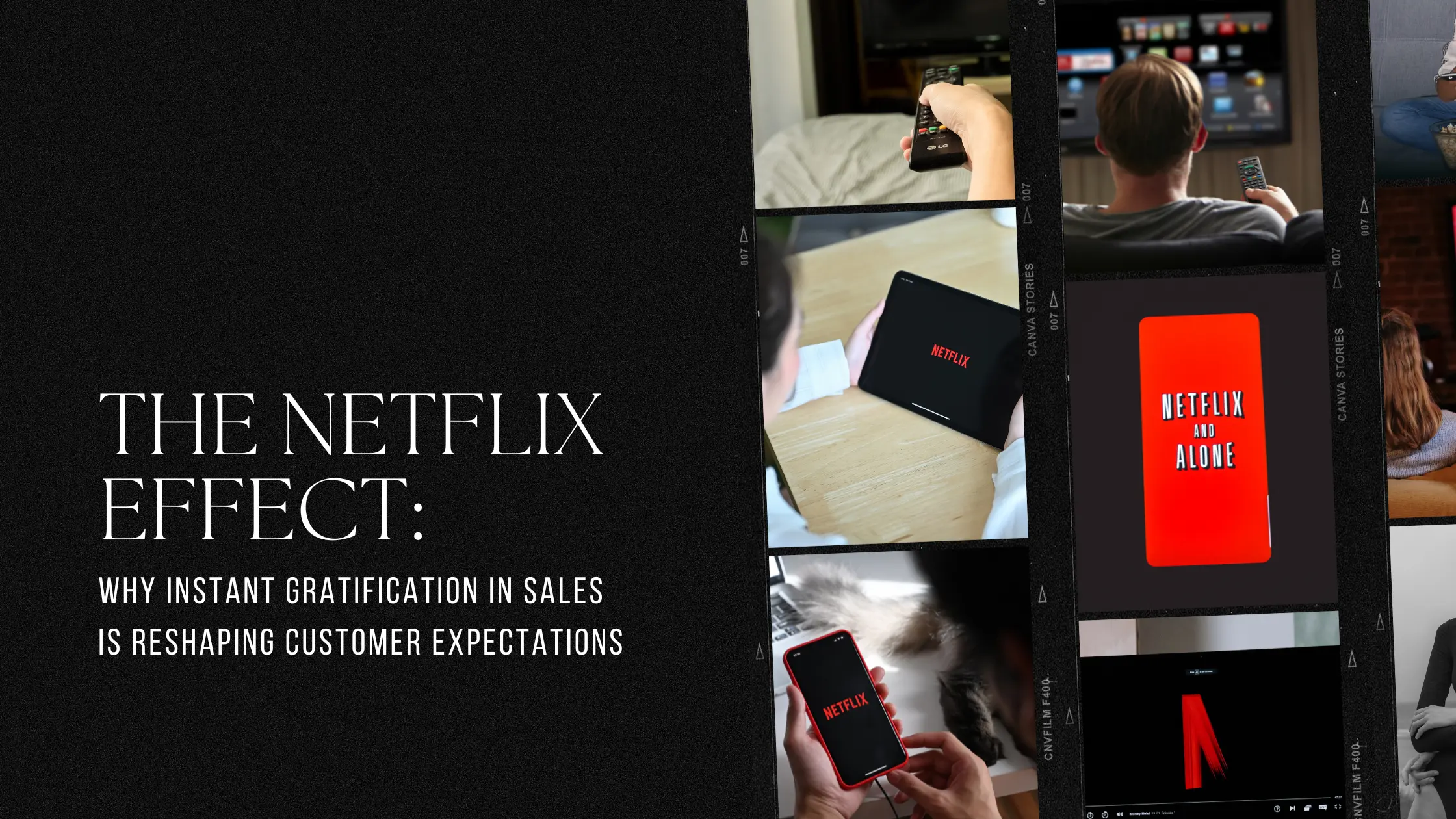
A few evenings ago, I opened Netflix to watch something. Within seconds the platform recommended shows based on my preferences, loaded them instantly, and began streaming without any delay.
That moment made me reflect on something important about modern consumer behaviour.
Today’s world runs on instant gratification.
Customers are used to getting entertainment instantly, booking rides instantly, ordering food instantly, and receiving products quickly. Naturally, they now expect the same speed in sales interactions.
In fact, studies often suggest that customers are far more likely to buy from the company that responds first to their enquiry.
I call this shift The Netflix Effect on Sales.
This shift emphasizes the importance of instant gratification in sales to meet consumer demands and enhance overall sales effectiveness.
For sales professionals, understanding this change is no longer optional. It is essential for survival.
Table of Contents
Slow Response Kills Deals
A decade ago, the sales cycle moved at a slower pace.
A prospect would enquire about a product, wait for a salesperson to respond, schedule a meeting, and take several days to make a decision.
Today, the situation is completely different.
The modern customer usually researches products online, compares multiple vendors, reads reviews and sends enquiries to several sellers simultaneously.
In such an environment, response time becomes critical.
If a prospect submits an enquiry at 10:00 AM and receives your response at 4:00 PM, there is a strong possibility that the deal has already been closed by someone else.
Not because the competitor had a better product.
But because they responded faster.
In my experience in financial services, I have seen this pattern repeatedly. Prospective investors often send enquiries to multiple advisors. The advisor who engages first often builds the initial level of trust.
That first conversation frequently determines who eventually wins the client.
Slow responses send an unintended message to customers:
There is a lack of urgency and interest.
And in the era of instant gratification in sales, that can cost you the opportunity.
Speed Is the New Competitive Advantage
Traditionally, businesses believed their competitive advantage came from:
- better pricing
- superior product features
- stronger brand reputation
These factors still matter.
However, in today’s digital economy, speed has become an equally powerful differentiator.
Consider how some companies have reshaped consumer expectations.
For example, Amazon made fast delivery the norm. Waiting several days for a product now feels inconvenient.
Ride-hailing platforms like Uber allow customers to book transportation within seconds.
Food delivery platforms like Zomato and Swiggy provide real-time order tracking.
These experiences have conditioned customers to expect speed, responsiveness, and convenience.
When such customers interact with a salesperson, they carry the same expectations.
If they send a message on WhatsApp or submit a website enquiry, they expect quick engagement.
In many industries today, the salesperson who responds first often wins the deal. Speed has therefore evolved from an operational metric into a strategic sales advantage.
Real-Life Examples of Instant Gratification in Sales
Let me share a few situations that illustrate how instant gratification in sales influences buying decisions.
Real Estate Enquiry
A friend once submitted an online enquiry for a residential project.
Within five minutes, one property advisor called him and offered to arrange a site visit the same evening.
Two other agents called the next day.
Guess who got the deal?
Not the cheapest agent.
Not the most experienced one.
But the fastest responder.
The first agent captured the customer’s attention when interest was at its peak.
Financial Advisory
In financial services, many prospective clients enquire about investments after reading something online.
If an advisor responds quickly and provides clarity, trust begins to develop immediately.
However, if the response is delayed, the client often moves on to someone else.
In today’s digital world, customer interest has a very short shelf life.
Speed helps capture that interest before it disappears.
Food Delivery Platforms
Think about the experience on Zomato or Swiggy.
Customers can track every stage of their order in real time.
Imagine ordering food and being told that you will receive updates “sometime tomorrow”.
It would feel unacceptable.
The same psychology now influences sales interactions.
Customers expect quick responses and real-time engagement.
Food for Thought for Today’s Sales Professionals
The Netflix Effect teaches an important lesson.
Customers are no longer comparing only products and prices.
They are comparing experiences.
Their expectations are shaped by platforms like:
These companies have trained customers to expect instant gratification.
For sales professionals, this raises some important questions.
- How quickly do you respond to enquiries?
- Do you treat every lead as time-sensitive?
- Do you have systems to ensure no prospect waits too long?
In my view, the modern salesperson must develop three habits.
Respond Immediately
Even if you cannot solve the problem instantly, acknowledge the enquiry quickly. It shows professionalism and respect.
Deliver Information Quickly
Keep brochures, presentations, and product details ready to share immediately.
Maintain Momentum
Follow up quickly. Momentum keeps the customer engaged and prevents competitors from entering the conversation.
As I often discuss on my blog, trust and responsiveness together form the foundation of modern sales relationships.

Final Thought
Digital platforms have permanently changed consumer psychology.
Thanks to services like Netflix, customers have become accustomed to instant access and instant gratification.
Naturally, they expect the same responsiveness from salespeople.
In this environment, success often belongs to the salesperson who responds quickly, engages meaningfully, and keeps the conversation moving forward.
Because in modern sales, the winner is not always the one with the best pitch.
More often, it is the one who shows up first. And in the age of instant gratification in sales, speed has moved from an advantage to a necessity.
FAQs
What are some examples of instant gratification?
Fast food delivery
Social media likes and shares
Streaming movies or music on demand
Online shopping with same-day delivery
Mobile games with quick rewards
Instant messaging and chat apps
One-click online purchasing
Instant access to news updates
Online courses with immediate content access
Virtual reality experiences
What is instant gratification in business?
Instant gratification in business refers to the immediate satisfaction or rewards that consumers seek when engaging with a product or service. It emphasizes quick results, fast services, and on-demand access to goods, catering to the desire for immediate fulfillment.
How does the Netflix Effect influence customer behaviour?
Platforms like Netflix have conditioned consumers to expect instant access to services. This expectation influences how they interact with businesses and sales professionals.
How can sales professionals adapt to instant gratification culture?
Sales professionals can adapt by responding quickly to enquiries, keeping product information ready for instant sharing, and maintaining momentum through timely follow-ups.
For more insights on sales, marketing, and professional growth, visit AsPerVikas.com

Sales Coach | Author of “The Sales Sanskar” | Creator of VUSM
Hi, I’m Vikas Taware. After years of hands-on experience in sales and marketing, I felt a strong pull to share the strategies I’ve mastered, the setbacks I’ve overcome, and the wins that shaped my journey. That led to AsPerVikas, a blog where I cut through the noise and share real, field-tested insights to help you sell smarter, market better, and grow faster.

Leave a Comment