

If you are wondering why customers are not buying from you, pause for a moment before blaming the market, pricing, or competition.
Because the hard truth is that customers are buying every single day, just not from you.
This blog is not about motivation.
It is about correction.
Table of Contents
Let’s break down the 7 real reasons why customers are not buying from you and, more importantly, how to fix each one with simple, actionable changes.
7 real reasons why customers are not buying from you
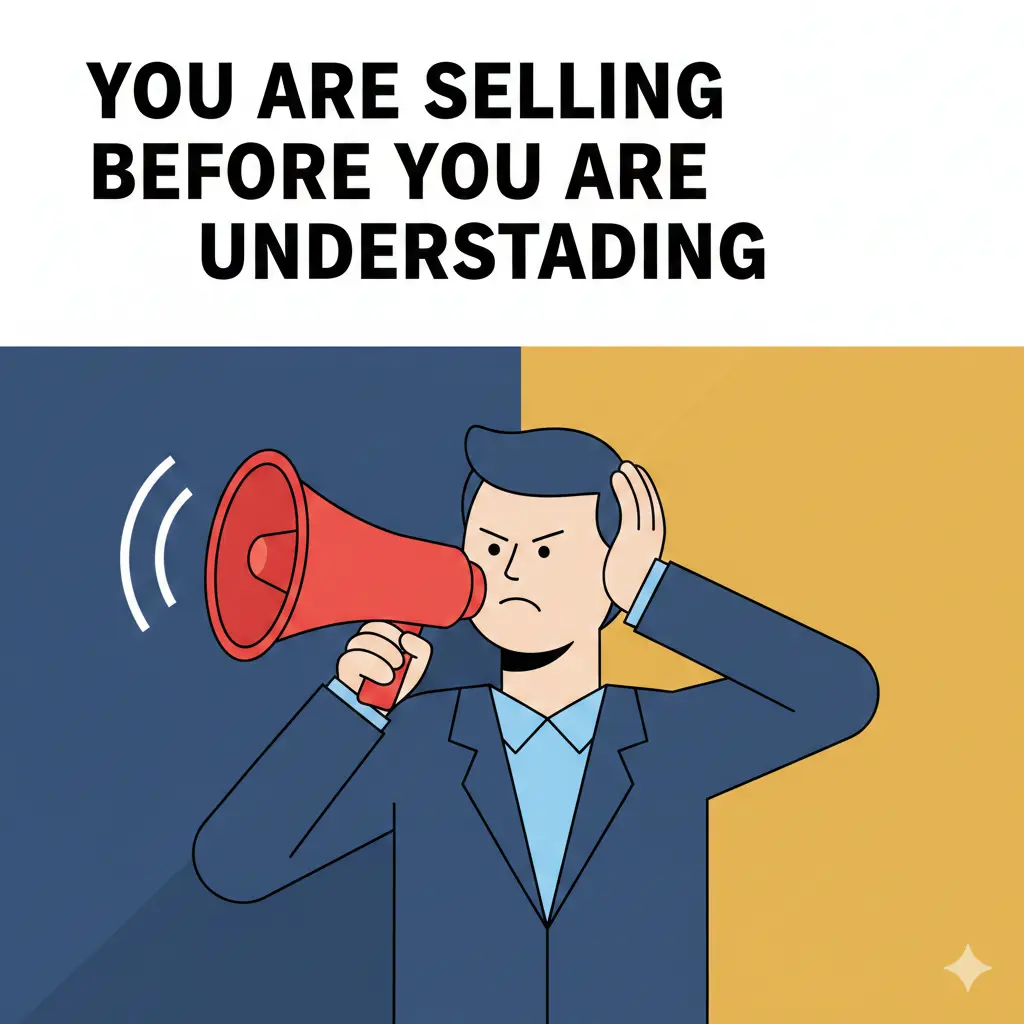
1. You Are Selling Before You Are Understanding
Most customers don’t feel heard.
Sales conversations often start with:
- Product explanation
- Feature dumping
- Return charts
- Company background
But customers are thinking:
“You don’t even know my problem yet.”
Example
A client once said after a meeting:
“He spoke for 40 minutes. I spoke for 3.”
That sale was already gone.
How to Fix It
Diagnose, before selling
Ask better questions:
- “What triggered this requirement now?”
- “What is not working in your current setup?”
- “What does success look like for you?”
When customers feel understood, buying becomes easier.
2. You Sound Exactly Like Your Competitors
If your pitch sounds generic, customers compare only on price.
Statements like
- “Best service”
- “Strong research”
- “Customer-first approach”
Everyone says this. Including the weakest player.
Example
Two advisors recommended the same fund.
One said:
“This fund has performed well.”
The other said:
“This fund protects the downside, which matters because you plan to withdraw money in 5 years.”
Same product. Different outcome.
How to Fix It
Stop selling products.
Start selling relevance.
Customise your explanation to:
- Customer goals
- Time horizon
- Risk comfort
- Life stage
People don’t buy uniqueness in products.
They buy uniqueness in understanding.

3. You Are Chasing Closure Instead of Building Confidence
Urgency without trust feels like pressure.
Lines like
- “Let’s close today.”
- “Offer valid till evening”
- “Sign now, details later.”
These don’t create urgency.
They create resistance.
Example
Back during my Sharekhan education days, we would have an offer of the day for all workshop attendees. A newcomer sales counsellor struggled because she was focusing only on closing the deal the same day without understanding the customer’s why. To understand the reasons behind her failure to convert, I decided to talk to one of her prospects, who said:
“She was in a hurry. I wasn’t.”
End of discussion.
How to Fix It
Replace pressure with clarity.
Say:
- “What would help you feel more confident?”
- “What concerns should we address before moving ahead?”
Customers don’t delay because they are lazy.
They delay because they are unsure.

4. You Are Not Handling the Real Objection
Most objections are hidden. My mentor at Sharekhan Education, Mr Mahesh Vichare, used to call it a ‘smoke screen.’
When customers say:
- “I will think about it.”
- “Let’s do it later.”
- “I need to check.”
They are actually saying:
“Something doesn’t feel right yet.”
Example
During a mentorship session for one of my business partners, he complained that his prospect kept postponing a decision. I suggested ways to unearth the real reason.
The real issue with the prospect was that he didn’t understand liquidity during emergencies.
Once clarified, the deal closed the same day.
How to Fix It
Learn to uncover real objections.
Ask calmly:
- “What exactly would you like to think through?”
- “What’s your biggest concern right now?”
Unspoken objections kill sales.
Spoken objections close sales.
(You may refer to my previous post on common sales objections here.)

5. Your Follow-Ups Are Weak or Random
Most deals are lost after a good meeting.
Common follow-up mistakes:
- No reference to previous discussion
- Long silence
- “Just checking in” messages
Example
Bad follow-up:
“Sir, any update?”
Good follow-up:
“You had mentioned that stability and tax efficiency are priorities. Sharing a solution aligned to that.”
Only one deserves a response.
How to Fix It
Every follow-up must:
- Add value
- Refer to the past conversation
- Move the discussion forward
Follow-up is not a reminder.
It is a continuation of value.

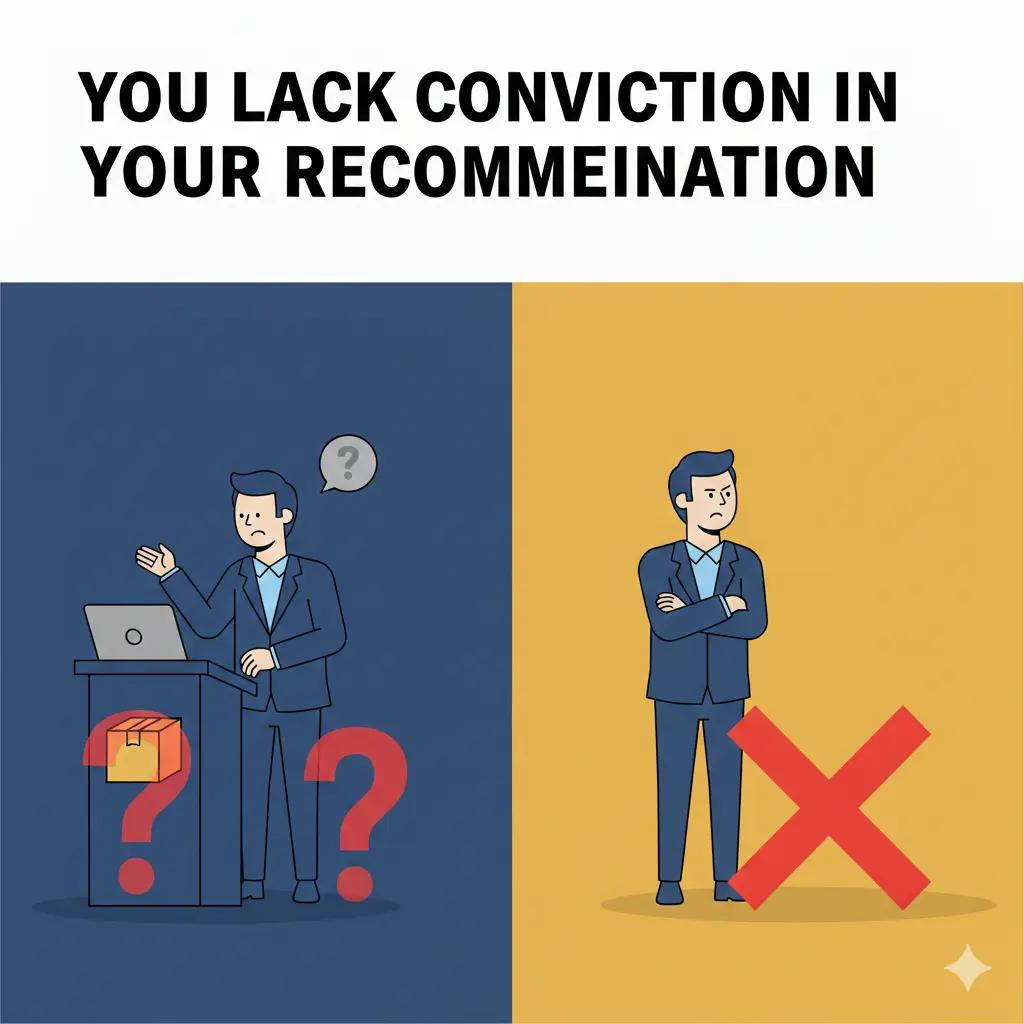
6. You Lack Conviction in Your Recommendation
Customers sense hesitation instantly.
Phrases like
- “This should be fine.”
- “You can try.”
- “I think it’s okay.”
They weaken trust.
Example
A client asked:
“Would you invest your own money here?”
The advisor hesitated, and Deal was lost.
I have mentioned the example of real estate agent Pravin Rathod in my book “The Sales Sanskar” and how he shifted his base to Lodha Palava to sell inventory there. His conviction in Lodha Palava city made him shift his residence there before he started selling, and his conviction radiated to make him one of the top-performing brokers in 2009-10.
How to Fix It
Build conviction through:
- Product clarity
- Risk awareness
- Honest communication
Confidence does not come from exaggeration.
It comes from clarity and preparation.
7. You Are Transaction-Focused, Not Relationship-Focused
Customers can sense when they are just a target.
If your focus is
- Month-end numbers
- Incentives
- One-time closure
Trust breaks.
Example
One advisor remembered the client’s goals and family context.
Another remembered only the portfolio size.
Only one got referrals, and you can easily guess that one.
How to Fix It
Think long-term:
- Relationship over revenue
- Trust over targets
- Lifetime value over one sale
Sales is not about convincing.
It is about connecting.

Fix Yourself Before Fixing the Market
If you want to know why customers are not buying from you, start here:
- Are you listening deeply?
- Are you explaining clearly?
- Are you following up professionally?
- Are you confident in what you recommend?
Markets change.
Customers evolve.
But self-correction always works.
When you improve how you sell, customers don’t feel sold to; they feel supported.
And that is when buying becomes natural.
For more insights on sales, marketing, and professional growth, visit AsPerVikas.com

Sales Coach | Author of “The Sales Sanskar” | Creator of VUSM
Hi, I’m Vikas Taware. After years of hands-on experience in sales and marketing, I felt a strong pull to share the strategies I’ve mastered, the setbacks I’ve overcome, and the wins that shaped my journey. That led to AsPerVikas, a blog where I cut through the noise and share real, field-tested insights to help you sell smarter, market better, and grow faster.

Leave a Comment