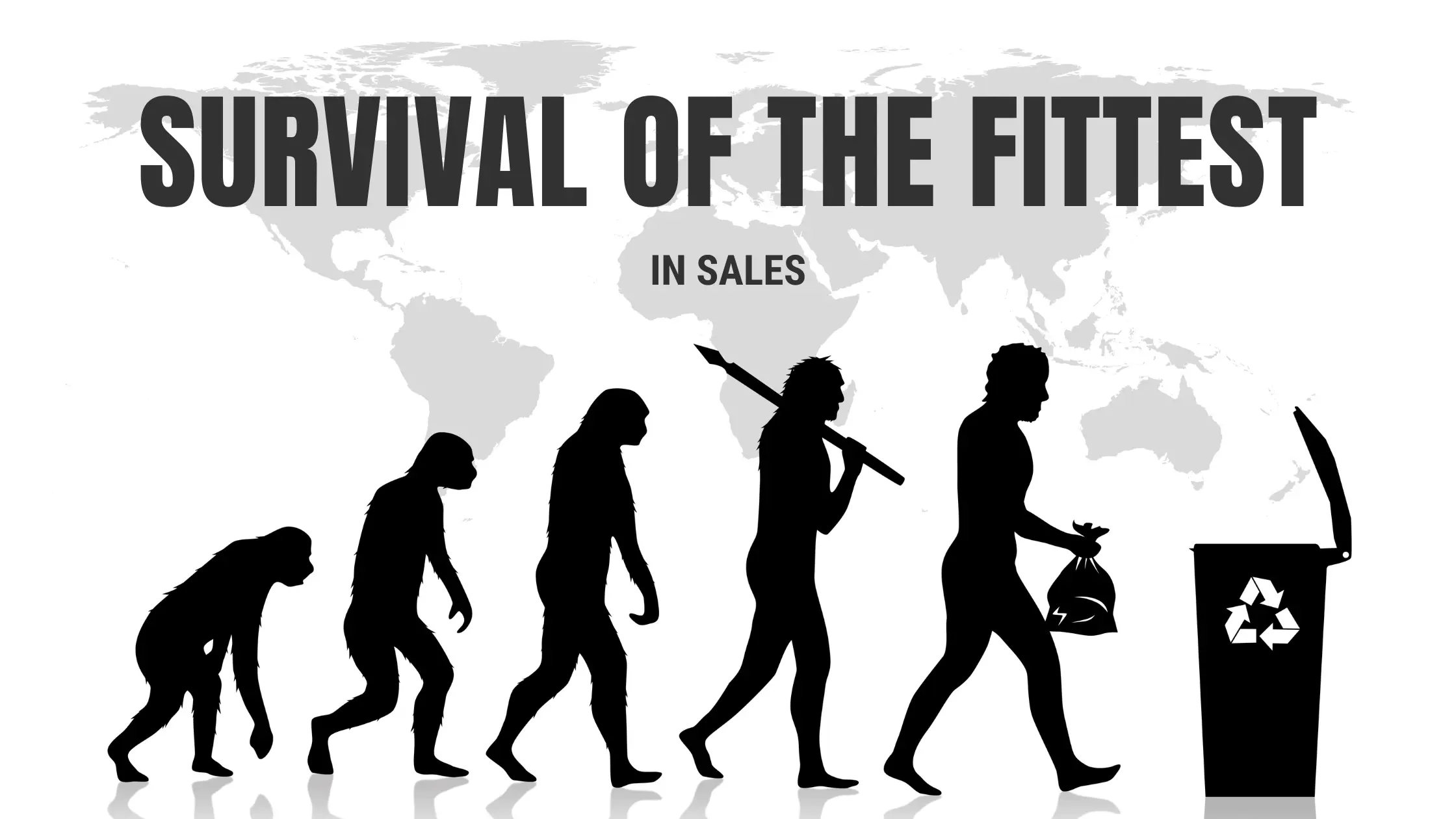
“Survival of the fittest” is a phrase we often use casually but rarely understand deeply.
For a long time, even I believed it meant survival of the strongest or the most aggressive. Over the years, especially through my experience in sales, I have realised that this idea was never about power. It was always about adaptability.
Originally introduced by Herbert Spencer and later linked to Charles Darwin’s theory of evolution, survival of the fittest simply means:
Those who adapt best to their environment are the ones who survive. That single idea explains almost everything I have seen happening in sales over the years.
Table of Contents
What Survival of the Fittest Really Means
In nature:
- Species don’t survive because they are perfect
- They survive because they respond better to change
- Evolution rewards relevance, not history
Dinosaurs were powerful, dominant, and unmatched in strength yet they disappeared. Smaller, adaptable species survived and evolved. I don’t have to tell you about Nokia. We all have witnessed its rise and fall.
Sales works exactly the same way.
The market doesn’t care about:
- How successful you were five years ago
- How many years of experience you have
- How hard you work
It only responds to how relevant your sales approach is today.
Sales Is an Evolving Ecosystem, Not a Fixed Skill
Sales has never been static, but the pace of change today is unprecedented.
Earlier, sales success depended on strong product knowledge, persuasive communication, and relationship longevity. Today, sales depend on the understanding of customer intent, contextual conversations, trust & transparency, and intelligent use of technology.
Salespeople who treat sales as a fixed skillset struggle. Those who treat sales as an evolving discipline survive.
This is where adaptability in sales becomes the real competitive advantage.
Real Sales Examples Where Adaptability Decided Survival
1. When Product Knowledge Lost Its Power
There was a time when product knowledge alone could close deals.
Insurance advisors explained benefits.
Mutual fund distributors spoke about NAVs and returns.
Customers depended on salespeople for information.
Then information became freely available.
Customers now walk into meetings already informed, sometimes more than the salesperson. Those who continued pitching features lost credibility. Those who shifted to goal-based, consultative selling survived.
The environment changed, and fitness was redefined.
2. The Decline of Traditional Cold Calling
Cold calling once defined effort in sales. More calls meant more chances.
Today:
- Unknown numbers are ignored
- Spam calls have destroyed trust
- Attention spans are limited
- And patience level is in seconds
Sales professionals who used referrals and warm introductions, leveraged LinkedIn and WhatsApp and focused on value before follow-up made fewer calls but closed higher-quality business.
Why Resilience Is a Core Sales Skill
In evolution, survival doesn’t mean avoiding failure. It means learning from failure faster than others.
Sales is no different.
Rejections, lost deals, and slow months are constants. What separates professionals is response:
- Some repeat the same methods
- Others reflect, refine, and evolve
In my experience, resilience in sales is about continuous adjustment. You may grab a copy of ‘The Sales Sanskar‘ to read more about resilience.
Why I Believe Referral-Led Sales Is the Future
This learning is also what led us at Motilal Oswal to adopt the Referral Associate (RA) model. Thanks to my mentor Vijay Agrawal, who conceived this thought here.
We realised something fundamental:
Trust precedes selling, and relationships replace persuasion.
Today’s customers don’t respond to noise. They respond to credibility. A recommendation from a trusted person outperforms even the most expensive advertisement.
The Referral Associate model is
- A low-cost customer acquisition strategy
- High impact and scalable
- Aligned with modern buying behaviour
While traditional sales rely heavily on advertising spends and aggressive outreach, referral-led sales leverage the most powerful currency in business, which is human trust.
This shift is redefining how selling happens:
- From persuasion to participation
- From advertising to advocacy
- From cost-heavy acquisition to relationship-driven growth
What “Fitness” Means in Modern Sales
Disclaimer: This is my interpretation of the modern sales and may defer from reality
Fitness today is understanding customer intent, using technology intelligently, listening more than talking, and building trust before selling.
The fittest salesperson today is not the loudest but the most relevant.
Sales Leaders Must Also Evolve
Sales leaders are not immune to natural selection. Leaders who measure only activity, not effectiveness, resist technology adoption, and discourage experimentation will end up leading teams that struggle to adapt.
The most effective sales leaders today act as coaches, enabling evolution rather than enforcing outdated playbooks.
Are You Still Fit for Today’s Sales Environment?
Markets will continue to change.
Customers will keep evolving.
Comfort zones will shrink.
The only sustainable advantage is adaptability.
Are your sales methods aligned with how customers buy today?
Are you evolving or surviving on past success?
I would love to hear your thoughts.
What does “survival of the fittest” mean in sales from your experience?
Have you seen adaptability make a real difference?
Share your perspective in the comments below.
Because in sales, survival is just the beginning, and evolution decides who leads.
For more insights on sales, marketing, and professional growth, visit AsPerVikas.com

Sales Coach | Author of “The Sales Sanskar” | Creator of VUSM
Hi, I’m Vikas Taware. After years of hands-on experience in sales and marketing, I felt a strong pull to share the strategies I’ve mastered, the setbacks I’ve overcome, and the wins that shaped my journey. That led to AsPerVikas, a blog where I cut through the noise and share real, field-tested insights to help you sell smarter, market better, and grow faster.

2 Replies to “Survival of the Fittest in Sales”
Anita vilas Kashale 14 Jan, 2026
Amazing
Vikas Taware 18 Jan, 2026
Thank You Anita.